HomeResearch

Research

Circuits & Dynamics of Movement

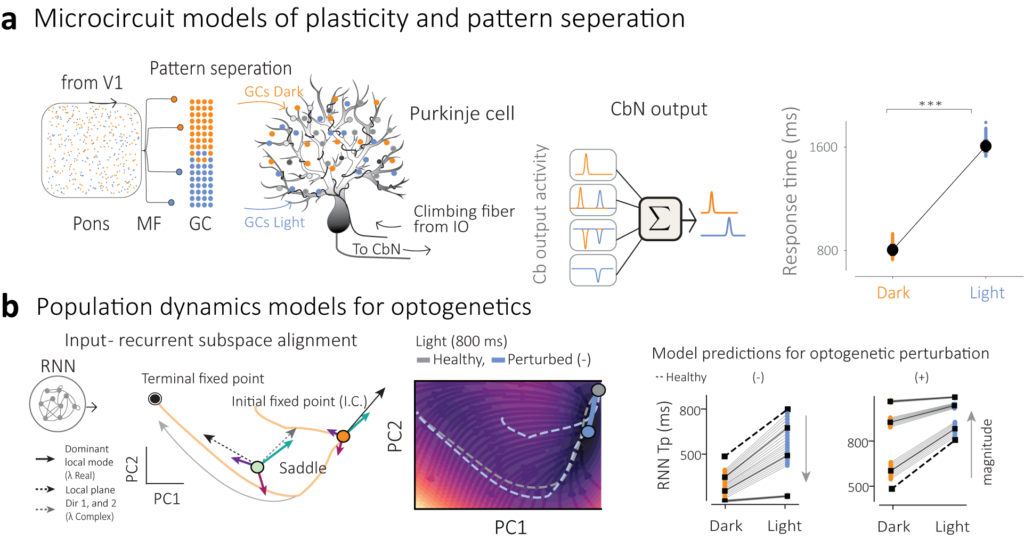
The same movement can unfold at different timescales, in different contexts and under changing demands. We ask how neural circuits flexibly control the timing and structure of movement. Using electrophysiology, perturbations and computational models across cortex, thalamus and cerebellum, we study how interactions from single neurons to populations give rise to adaptable motor behavior.
Learning & Prediction

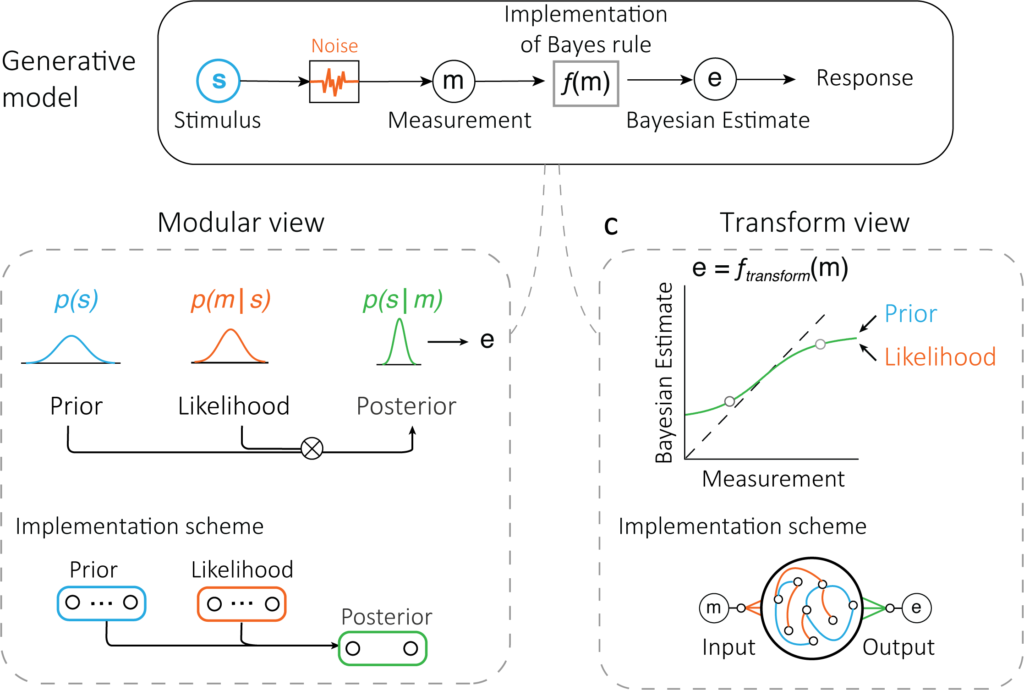
From experience, the brain learns what tends to happen, when, and in which context. In Bayesian terms, these expectations form priors that are combined with uncertain sensory evidence to guide perception and action. We combine behavior, neurophysiology and probabilistic modeling to ask how such priors are learned, represented and updated, how their reliability is weighted against new evidence, and how Bayesian inference shapes predictive behavior.

Neural Geometry

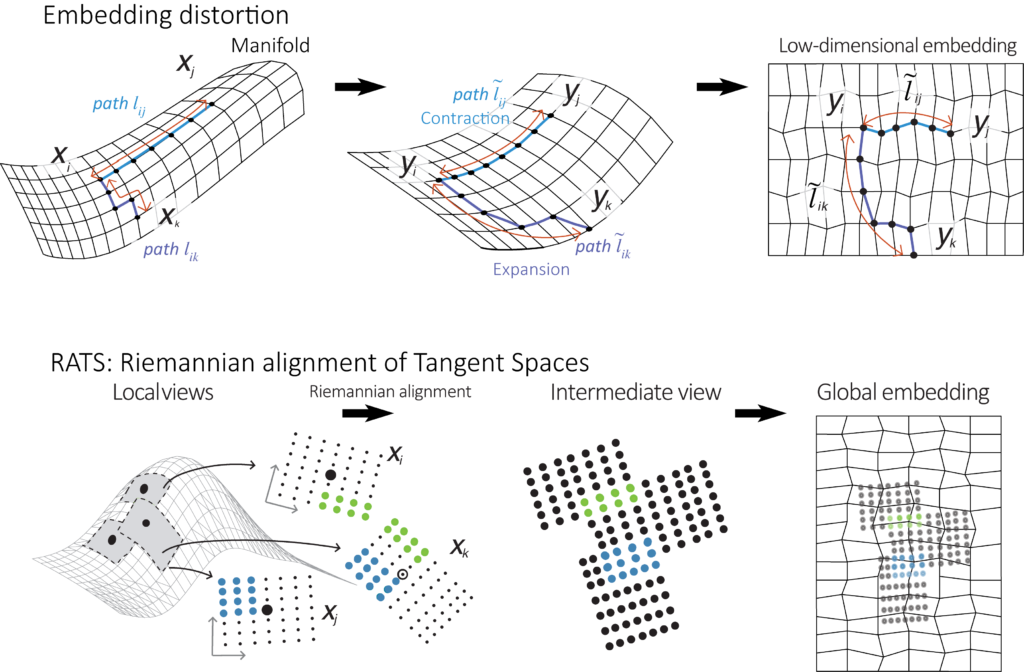
We develop geometric methods to characterize the structure of high dimensional neural activity. Drawing on differential geometry and matrix manifold methods, we measure and estimate distortion, compare latent representations, and develop new manifold learning approaches tailored to neural data. Our aim is to build analysis tools that preserve meaningful geometric structure while revealing how neural population activity is organized.